Smart Agriculture: IoT Sensor Dashboards & Analytics

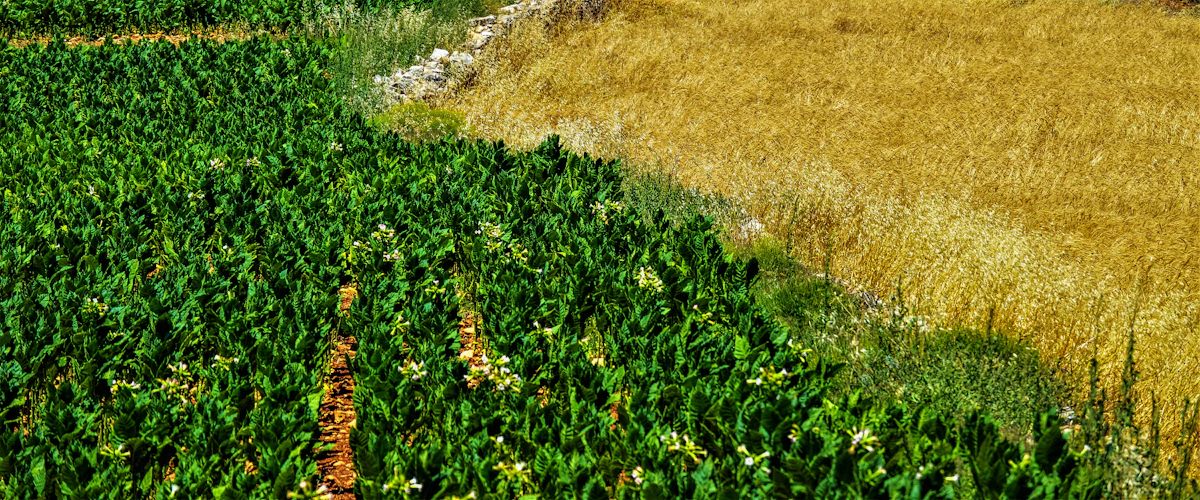
Precision Farming: The Data-Driven Harvest
The global population is exploding, and arable land is shrinking. To survive, the agricultural industry is undergoing a massive digital transformation known as Precision Farming.
Instead of watering an entire 10,000-acre field based on intuition or a calendar, farmers now use localized data to water only the specific 100-square-foot patches of soil that are mathematically dry. This reduces water consumption by 40% and drastically increases crop yields.
At DevApps Technology, we engineer the complex cloud architecture and AgTech Dashboards that make Precision Farming possible.
1. The Connectivity Problem (LoRaWAN)
If you place a soil moisture sensor in the middle of a massive cornfield in rural Nebraska, it will not have Wi-Fi. It probably won't even have a 4G cellular signal.
We architect agriculture networks using LoRaWAN (Long Range Wide Area Network).
- LoRa is an incredible radio protocol designed specifically for IoT.
- A single, solar-powered LoRa Gateway placed on top of a farmer's barn can receive data from battery-powered soil sensors located up to 10 miles away.
- The sensors transmit tiny packets of data (soil moisture, pH levels, NPK nutrient levels) every hour. Because the radio frequency is so low-power, a sensor can run on a single AA battery for up to 10 years in the dirt.
- The Gateway collects this radio data and forwards it to our AWS backend via satellite or cellular backhaul.
2. Ingesting Drone Telemetry and Satellite APIs
Soil sensors only tell part of the story. AgTech requires massive spatial context.
- Drone Integration: We build API endpoints that ingest photogrammetry data from autonomous drones flying over the fields. The drones use multi-spectral cameras (NDVI) to detect exactly which plants are suffering from nitrogen deficiency or pest infestations before the human eye can see it.
- Weather APIs: We integrate robust third-party APIs (like Tomorrow.io or OpenWeatherMap) to pull hyper-local micro-climate forecasts.
Our Node.js backend fuses these three disparate data sources (Ground Soil Sensors + Drone Aerial Data + API Weather Forecasts) into a single, unified PostgreSQL/PostGIS database.
3. The React Farm Dashboard (Next.js)
Data is useless if the farm manager cannot understand it.
We build highly visual, interactive web applications using Next.js and React.
- Geospatial Mapping: We utilize Mapbox GL JS to render interactive, high-definition satellite maps of the farm.
- The map is overlaid with a dynamic heatmap generated by WebGL. Areas of the farm with critical moisture deficiency glow bright red.
- Predictive Analytics: We implement machine learning algorithms on the backend. When the farmer logs in, the dashboard doesn't just say, "Field 4 is dry." It says: "Based on current soil moisture (20%) and a 90% probability of heavy rain tomorrow at 2:00 PM, AI recommends skipping irrigation today to save $4,000 in pumping costs."
4. Automated Actuation (Closing the Loop)
The ultimate goal of AgTech is full automation.
If the dashboard determines that Field 7 requires water, the farmer shouldn't have to drive a truck out to manually open a valve.
- The farmer clicks "Irrigate Field 7" on their iPad.
- The Next.js frontend sends a GraphQL mutation to the Node.js server.
- The server publishes a command via MQTT down to the LoRa Gateway.
- The Gateway sends a radio signal to the physical IoT water valve in Field 7, instructing it to open for exactly 45 minutes, fully automating the entire agricultural loop.
Are you building the future of sustainable agriculture? AgTech requires robust hardware integrations and complex geospatial mapping. Contact DevApps Technology to architect your precision farming software.
Tags & Topics
Ready to transform your enterprise?
Contact DevApps Technology to architect a custom software solution tailored to your exact business requirements.
Schedule a Consultation