Logistics WMS Architecture: Integrating Barcode & RFID Scanners

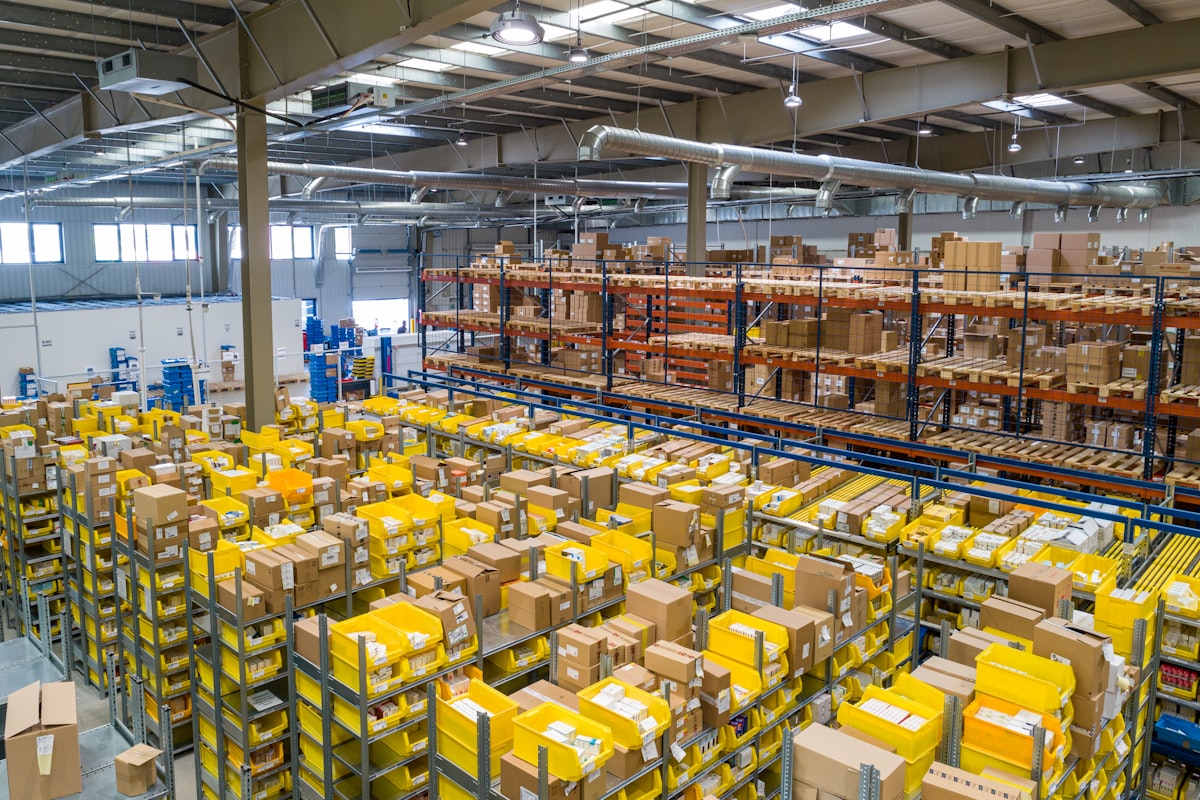
Hardware Meets Software in the Warehouse
A modern Warehouse Management System (WMS) is useless if it requires a forklift driver to take off their gloves, walk to a desktop computer, and manually type in a 12-digit SKU.
Efficiency in logistics demands seamless hardware-to-software integration. The software must talk directly to rugged Android devices, Bluetooth Zebra barcode scanners, and fixed UHF RFID gates.
At DevApps Technology, we architect custom WMS platforms that bridge the gap between heavy industrial hardware and modern web infrastructure.
1. Barcode Integration (Zebra DataWedge)
Many junior developers try to integrate barcode scanners by treating them as simple "keyboard wedges" (where the scanner simply types the barcode into an active HTML input field). This is fragile. If the cursor isn't exactly in the right field, the scan is lost.
The Enterprise Solution: Android Intent Broadcasting
For rugged devices (like Zebra TC52s), we utilize DataWedge. Instead of typing keystrokes, the scanner hardware broadcasts a background Android Intent. We build a React Native Android app that listens for this specific Intent.
- Regardless of what screen the user is on, the React Native app captures the barcode payload silently in the background.
- It validates the SKU against a local SQLite database (for offline resilience) and instantly updates the UI to show the pick-list progress.
2. RFID Gate Integration (IoT & WebSockets)
In high-volume logistics, scanning individual barcodes is too slow. Pallets are tagged with UHF RFID (Radio Frequency Identification) tags, and driven through fixed RFID reader gates.
The Architecture:
- The Edge Device: A Raspberry Pi or Industrial IPC sits at the physical dock door, connected to the RFID reader via Serial (RS-232) or Ethernet.
- The Local Broker: A lightweight Node.js or Rust service runs on the Edge Device, listening to the continuous stream of RFID tag reads. It filters out "noise" (duplicate reads of the same tag within 5 seconds).
- The Cloud Connection: The Edge Device maintains a persistent WebSocket connection (or MQTT tunnel) to the central AWS/Vercel server.
- Real-Time UI: When a pallet passes through the gate, the Edge Device fires the payload to the cloud. The Next.js admin dashboard, also connected via WebSockets, instantly turns the dock-door icon green, updating the global inventory count without a page refresh.
3. Optimizing Pick Routes (The Traveling Salesperson)
A custom WMS doesn't just record inventory; it dictates workflow.
If a picker needs to collect 40 different items for an order, sending them back and forth across a 100,000 sq ft warehouse wastes hours of labor. We implement routing algorithms (variations of the Traveling Salesperson Problem) in Python or Node.js.
- The system maps the XYZ coordinates of every bin location.
- When an order is generated, the algorithm calculates the most efficient walking path.
- The React Native app guides the picker step-by-step down the optimal aisle path.
Is your warehouse running on spreadsheets or legacy AS/400 systems? Modernize your logistics with a custom WMS. Contact DevApps Technology to integrate your hardware with cutting-edge software.
Tags & Topics
Ready to transform your enterprise?
Contact DevApps Technology to architect a custom software solution tailored to your exact business requirements.
Schedule a Consultation